
 Back to blog
Back to blog
Back to blog
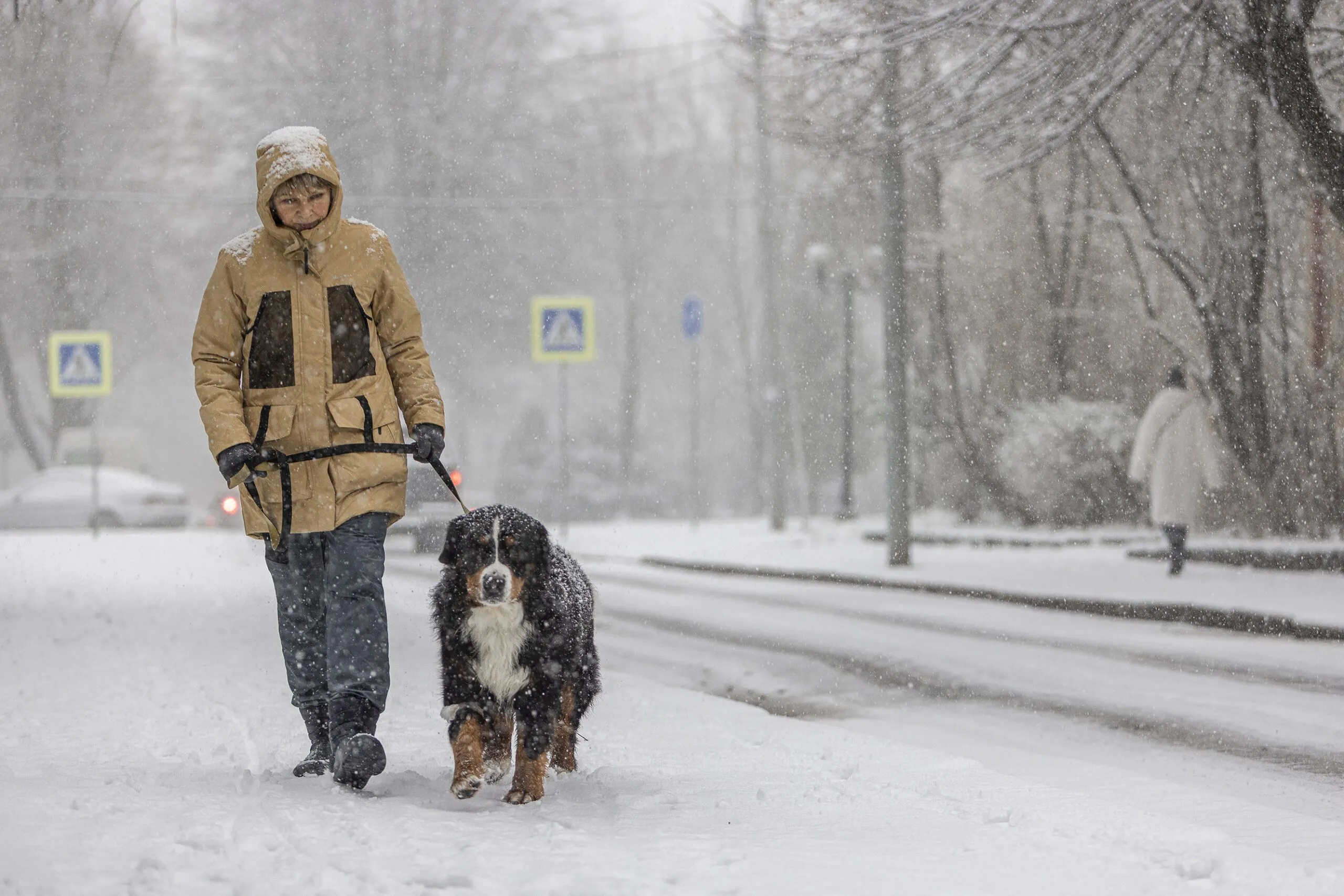
Berlin winters are genuinely hard on dogs' coats and paws. The combination of cold temperatures, Streusalz (road grit and salt) on the pavements, and frequent mud in parks like Volkspark Friedrichshain or Prenzlauer Berg's smaller green spaces means coats get dirtier faster and paw pads take a beating.
A few practical habits make the difference between a coat that stays healthy through winter and one that needs extra work come spring.
Rinse paws after every walk
Salt from pavements accumulates in the paw pads and between the toes. If your dog licks their paws after a salted-pavement walk, ingesting road salt isn't good for dogs — a quick paw rinse after walks removes it before they can lick it off. More immediately, the salt dries out and irritates the paw pad skin.
A quick rinse with lukewarm water after each walk is enough. Dry thoroughly, especially between the toes — wet skin between pads is prone to cracking and irritation. A dedicated paw towel by the door makes this easy to build into a routine.
Brush more frequently in autumn and early spring
Double-coated breeds — Huskies, Border Collies, German Shepherds — shed heavily twice a year, usually in autumn and spring. A de-shedding session at the groomer removes the dead undercoat that would otherwise mat and reduce airflow to the skin. Between visits, brushing two or three times a week during shedding season is significantly better than a once-weekly brush of the same total time.
Don't let mud dry into the coat
The temptation after a muddy park walk is to let the mud dry and brush it out. For short-coated dogs this usually works fine. For medium and long-coated breeds, dried mud compresses the coat and is harder to brush out than fresh mud, sometimes pulling at the skin and causing irritation. Rinsing before drying — even just the legs and underbelly — is easier in the long run.
Paw pad care at the studio: we offer a paw pad moisturising treatment that's worth booking in November or December, when the salt season is starting. It takes about ten minutes added to a regular session and makes a noticeable difference to pad condition through the winter.
When is an express groom worth booking?
If your dog has been on heavy muddy walks for several weeks and their coat is starting to look compressed and dull, an express groom — brush-out, paw clean, nail trim — is a good option between full sessions. It's faster and cheaper than a full groom and resets the coat for another few weeks of Berlin winter conditions.
The other good time to book an express groom is just before Christmas, if family visits or holiday travel mean you want your dog looking tidy without committing to a full session.
Avoid over-bathing in winter
Bathing too frequently in cold weather strips the coat's natural oils, which are part of its insulation system. Unless the coat is genuinely dirty or smells strongly, every six to eight weeks is usually sufficient for a bath during winter. Between baths, a good brush-out and paw rinse handles most of the maintenance.